


 residential moving
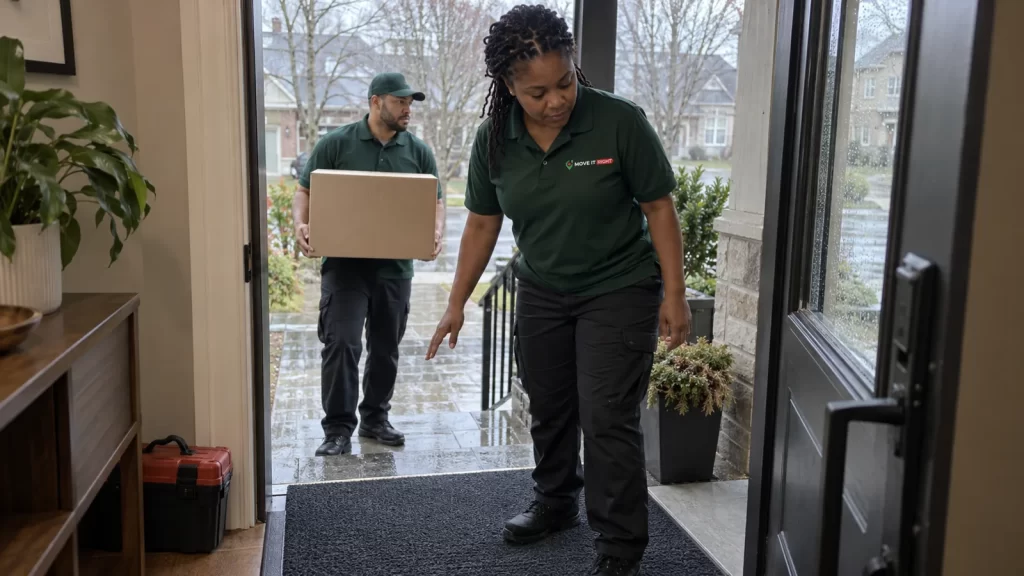
When bad weather threatens your move, a proper rainy moving day entryway setup needs a clear carrying route, agreed floor protection, and somewhere to manage wet packaging before belongings reach their rooms. The front door is where outdoor weather meets indoor traffic; it deserves its own dedicated plan.
You do not need to turn the hallway into a storage closet. Decide what belongs beside the entrance, what must stay out of the walkway, and who will manage the space while unloading continues. Apply these same decisions to the home you are leaving.
In This Article
Map the Route Before You Put Anything Down
Stand outside with the front door closed. Follow the path a mover takes from the unloading area to the primary rooms. Note the doorstep, door swing direction, and immediate hallway turns. Visualize that route with the door wide open as bulky furniture moves through.
A standard doormat may block the pivot point needed for turning large furniture. Clear everyday clutter, umbrella stands, and coat racks from the entryway before placing wet-weather supplies.
If your home has two entrances, select one primary doorway for carrying items and communicate this choice to the moving team. A side entrance that seems convenient from inside may feature a narrow exterior path. Let the movers evaluate the safest route.
For broader preparations elsewhere in the house, review our home preparation before moving day guide. Keep this entryway plan focused specifically on high-traffic threshold areas.
Agree on Floor Coverings With the Crew
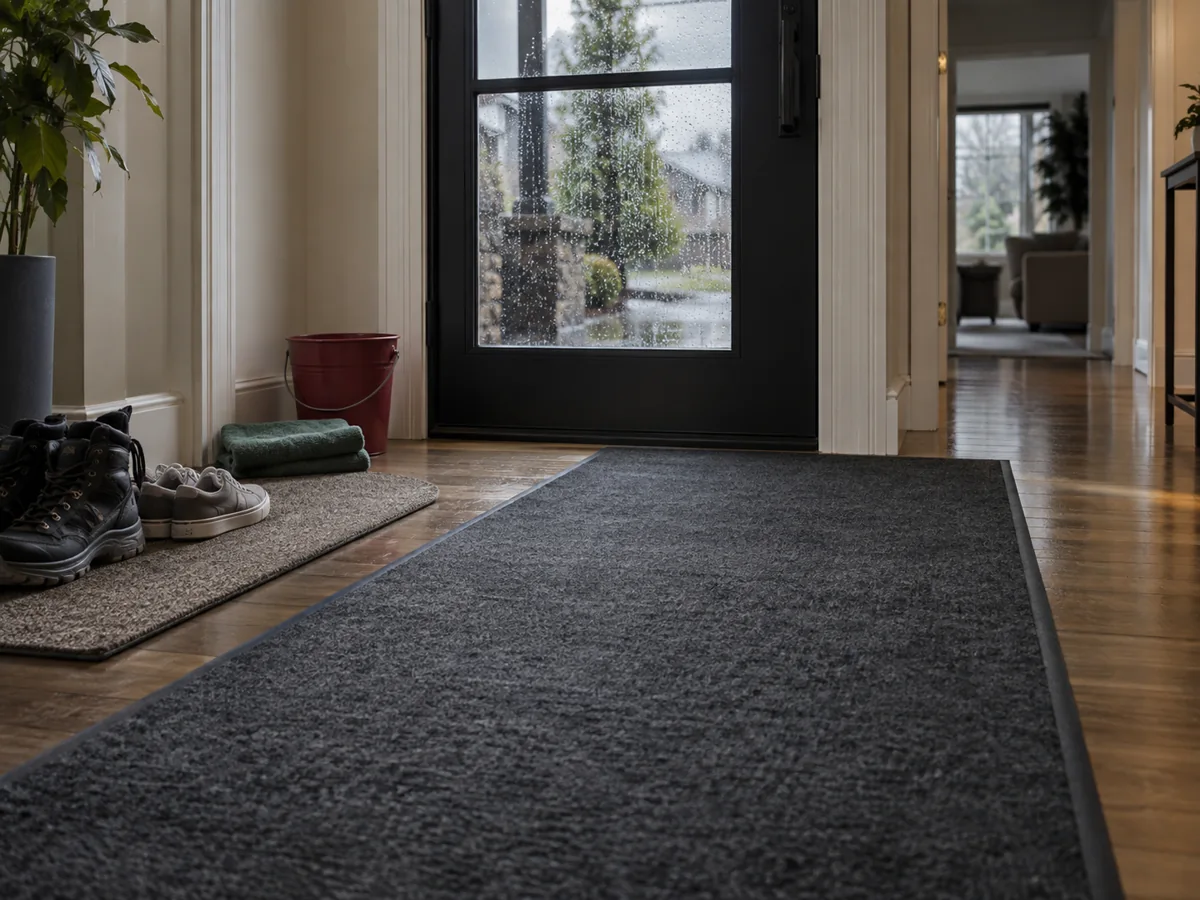
Discuss floor protection options with your movers before arrival. Detail the flooring types at both locations, such as entryway tile, hardwood, or carpeted stairs. When coordinating a rainy moving day entryway setup with professional movers, sharing photos of entry paths helps ensure proper runner placement.
The Office of Consumer Affairs recommends asking about floor runners at both addresses. Confirming what the crew supplies avoids last-minute setup delays.
Avoid layered, makeshift floor protection. Loose towels, overlapping rugs, and unanchored plastic sheets create tripping hazards. The Canadian Centre for Occupational Health and Safety highlights wet surfaces and loose mats as key risks in its slip and trip prevention guidance, recommending flat, secured mats and clear walkways.
PRO TIP
Ask the crew lead to inspect the entryway layout before offloading begins. Adjusting runners while the hallway is empty is much easier than moving them mid-process.
The Home Depot video below offers a general look at preparing belongings for a move. Use it alongside the specific plan you agree on with your crew.
Choose a Receiving Spot Beside the Route
A receiving spot is a dedicated staging zone, not a pile in the doorway. Creating a functional rainy moving day entryway setup means reserving an area to assess items, check box labels, and wipe down damp outer wraps without blocking the entryway path.
Determine where protective blankets will be unwrapped. Removing wet furniture padding inside a narrow door frame spreads moisture. Unwrapping should occur once the item rests safely in its designated staging spot.
Set up a separate coat rack or basket for family umbrellas and wet raincoats away from the main carrying path to prevent unnecessary foot traffic across active walkways.
For condo moves, coordinate lobby entry protocols with building management before reviewing your unit’s entrance setup with the movers. Our guide on planning for moves between condo buildings outlines key building rules.
Keep a Small Entrance Kit Within Reach
Keep essential supplies organized near the entrance on a shelf or side table. Include clean towels, a recycling bin for discarded plastic wrap, permanent markers, and your room placement floor plan.
Separate clean, dry towels from damp ones so fresh wipes remain readily available throughout the day.
Store box cutters and tools at the receiving station rather than near the door threshold. Allow movers to set items down completely before cutting away protective shrink wrap.
QUICK TAKE
An effective entrance kit stays within reach without encroaching on the walking path. If supplies block incoming boxes, relocate them to an adjacent shelf.
Give Everyone One Entrance Plan
Assign one point of contact to manage entryway decisions. That individual should remain accessible near the receiving area to direct items as they arrive.
Organizing your rainy moving day entryway setup early keeps everyone on the same page. Instruct family members on where to store personal items, and keep pets and young children in a safe, quiet room away from the carrying path.
Monitor local weather forecasts using Environment Canada weather alerts on moving morning. Communicate weather updates directly to your moving crew lead so adjustments can be made promptly.
Reset the Entrance as Conditions Change
Maintain the entryway throughout the unloading process. Periodically dry off pooled water, re-secure shifted floor runners, and clear out empty boxes as they accumulate.
If wind or rain directions shift mid-day, adjust your receiving spot accordingly to keep incoming items dry.
Once unloading concludes, inspect both entryways with the crew lead to confirm floor runners are removed and surfaces remain clean. When you hire experienced professionals for relocating your household belongings in Toronto or local moves across Vaughan, a well-executed rainy moving day entryway setup protects both your old and new homes throughout moving day.
Questions Before Moving Day
What If Rain Is Forecast Only After the Move Starts?
Discuss the entrance arrangement before the crew arrives anyway. Leave the receiving spot available and keep your small entrance kit separate from packed belongings. If conditions change, tell the crew before rearranging coverings or switching doors.
Should We Change Shoes at the Door During Unloading?
Agree on the entrance routine directly with the movers. Do not introduce a shoe-changing station in the carrying route or ask someone to change footwear while handling a load. Explain your flooring concerns beforehand so the crew can place floor runners.
Keep the Planning Checklist
Use this short checklist to collect the details you want to discuss before moving day.
Keep Reading
Labels That Help at the Receiving Address
Talk Through Your Local Move
Share the plan, access details and questions you still need to settle. MoveItRight can discuss the arrangements for your local household or office move.